English
 Español
 Français
 Pусский
 ربى
ربى 
In offices, schools, and restaurants, the shared bathroom is a constant concern for facility managers. Among the usual suspects—toilet seats, door handles, faucets—the toilet brush and its holder rarely get the attention they deserve.
Many assume the brush itself is unhygienic by nature. But eliminating it isn’t practical; commercial restrooms need cleaning tools. The real question is whether the Toilet Brush Holder is designed to minimize bacterial growth. A poorly designed holder traps moisture, collects debris, and becomes a breeding ground for bacteria and biofilm.
This guide covers where bacteria accumulate most, the difference between open and closed holder designs, the importance of removable drip trays, brush head materials, antimicrobial additives, and a practical cleaning protocol for shared bathrooms. For facility managers and procurement professionals, this is a practical framework for specifying holders that actually protect public health.
Where Bacteria Accumulate Most
Understanding the contamination hotspots in a toilet brush holder is the first step to choosing a sanitary design.
The Bottom of the Holder Cup
Water and debris collect at the bottom of the holder cup, forming a nutrient-rich environment for bacteria. Over time, this creates biofilm—a slimy layer of microorganisms that is difficult to remove and resistant to cleaning agents. A holder with a removable cup or drip tray addresses this
problem directly.
Ventilation Holes – Too Small or Poorly Placed
Ventilation is essential for drying, but only if the holes are large enough and positioned correctly. If the holes are too small or located where air can’t circulate, the interior stays damp, creating ideal conditions for bacterial growth.
Brush Head Core and Bristles
The center of the brush head and the base of the bristles are difficult to clean. Residue accumulates there, especially with traditional bristle brushes. Even after rinsing, organic matter remains trapped. This is why brush head material and shape matter significantly for hygiene.
Open vs. Closed Holder Design
The holder’s design—whether open or closed—directly affects how quickly it dries and how easy it is to clean.
Closed Holders – Aesthetic but Risky
A closed holder looks neat and hides the brush from view, which many facility managers prefer. However, without proper ventilation, the interior stays damp for extended periods. In shared bathrooms where the holder is used multiple times a day, this dampness creates a persistent bacterial hazard.
Open Holders – Better Drying but Less Tidy
Open holders allow air to circulate, which helps the brush dry faster between uses. The trade-off is visual—the brush is visible, which some perceive as less tidy. For commercial settings, the hygienic benefit of faster drying usually outweighs the aesthetic concern.
The Compromise – Closed with Drainage
For shared bathrooms, the ideal is a closed holder with bottom drainage holes. This combines the neat appearance of a closed design with the drying capability of an open one. BAOGELI‘s freestanding stainless steel toilet brush holder features a leakproof hidden design that balances aesthetics with function.
Removable Drip Tray – The Hygiene Game-Changer
The single most important feature for a sanitary toilet brush holder is a removable, cleanable drip tray.
Why Removable Matters
A fixed cup traps water and debris at the bottom. Over time, it becomes impossible to clean thoroughly. A removable drip tray can be taken out weekly, soaked in disinfectant, and scrubbed clean. This simple feature dramatically reduces the bacterial load in the holder.
Sealed vs. Unsealed Designs
Holders with silicone seals or gaskets are easier to disassemble and clean than those with permanent joints. BAOGELI‘s holder features a leakproof hidden design, preventing water from seeping into areas that can’t be cleaned.
Material Compatibility
Stainless steel holders—especially 304 stainless—resist corrosion from cleaning chemicals and are easier to sanitize than plastic or ceramic alternatives. BAOGELI offers holders in 304 or 201 stainless steel, space aluminum, and metal with glass or ceramic options.
Brush Head Material and Shape
The brush head itself is a critical factor in overall hygiene. Not all brush heads are created equal.
Silicone vs. Plastic Bristles
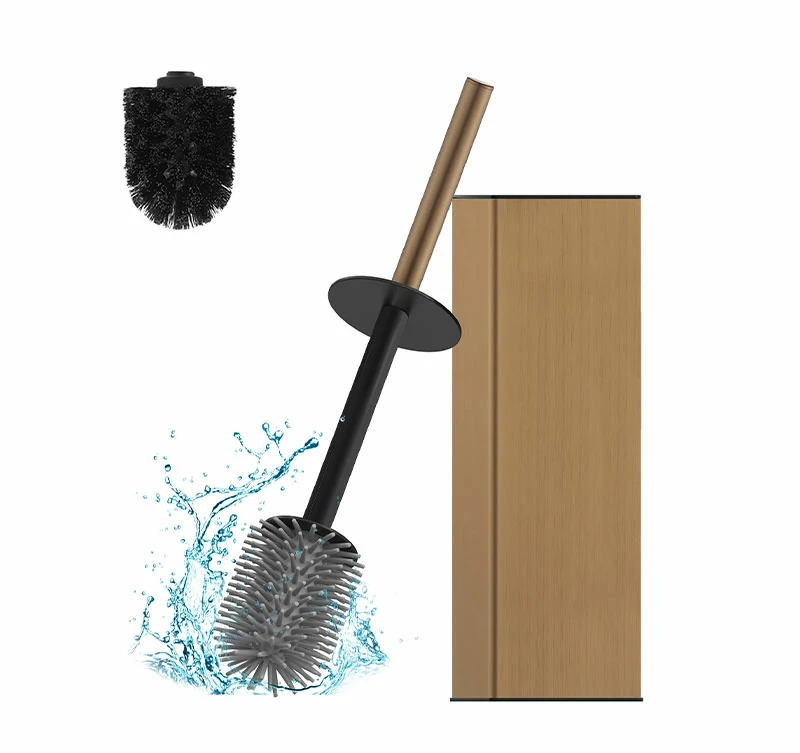
BAOGELI offers two types of brush heads: a black or white plastic brush head and a silicone toilet brush head. Silicone brushes are easier to clean than traditional bristle brushes. They don‘t trap debris in the same way, and they dry faster, reducing bacterial growth.
Shape and Cleaning Effectiveness
An angled toilet brush cleans the inside seam of the toilet more cleanly. A spherical brush works better for dead corners. The right shape depends on the toilet design, but both are more effective than a flat, straight brush.
Antimicrobial Additives
Some brush heads incorporate silver or zinc ions into the plastic. These antimicrobial additives inhibit bacterial growth on the brush surface. However, they are not a substitute for regular cleaning—they only slow reproduction, not eliminate it.
A Practical Cleaning Protocol for Shared Bathrooms
Even the best-designed holder needs a regular cleaning schedule to remain hygienic.
Daily – Disinfect and Dry
Spray the inside and outside of the holder with a disinfectant. Let it sit for three minutes, then wipe dry with a paper towel. This daily routine prevents biofilm from establishing.
Weekly – Deep Clean the Drip Tray
Remove the drip tray (if the holder has one) and soak it in a bleach solution for 10 minutes. Scrub it clean, rinse thoroughly, and dry before reinserting. BAOGELI‘s holders include a cleanable and removable cup as part of the complete holder.
Monthly – Replace the Brush Head
If the holder uses replaceable brush heads, swap them monthly. For high-traffic shared bathrooms, consider replacing the entire holder every 12 months. Disposable brush heads with cleaning pads are the gold standard for hygiene, though they come at a higher cost.
Questions Facility Managers Ask
Is it more sanitary to use disposable toilet brush heads?
Yes. Disposable heads with cleaning pads are the gold standard for hygiene because they eliminate the problem of residue buildup in the brush head. However, they are more expensive and generate more waste. For high-traffic facilities like schools and hospitals, the hygiene benefit often justifies the cost.
Can I pour bleach directly into the holder cup?
No. Bleach can corrode stainless steel and degrade plastic over time. Use a diluted bleach solution for soaking removable parts, and always rinse thoroughly afterward. For routine cleaning, a commercial bathroom disinfectant is safer for the holder material.
How often should the entire holder be replaced?
For high-traffic shared bathrooms, replace the entire holder every 12 months. Even with regular cleaning, microscopic scratches and wear create places for bacteria to hide. BAOGELI‘s stainless steel holders offer greater durability than plastic alternatives, extending their useful life.
Choosing a Holder That Protects Public Health
The right toilet brush holder for a shared bathroom balances ventilation, cleanability, and durability.
Material Selection
Stainless steel—especially 304 grade—is the preferred material for commercial restrooms. It resists corrosion from cleaning chemicals and offers a polished, professional appearance. BAOGELI offers 304 and 201 stainless steel options, as well as space aluminum and metal with glass or ceramic.
Color and Finish Options
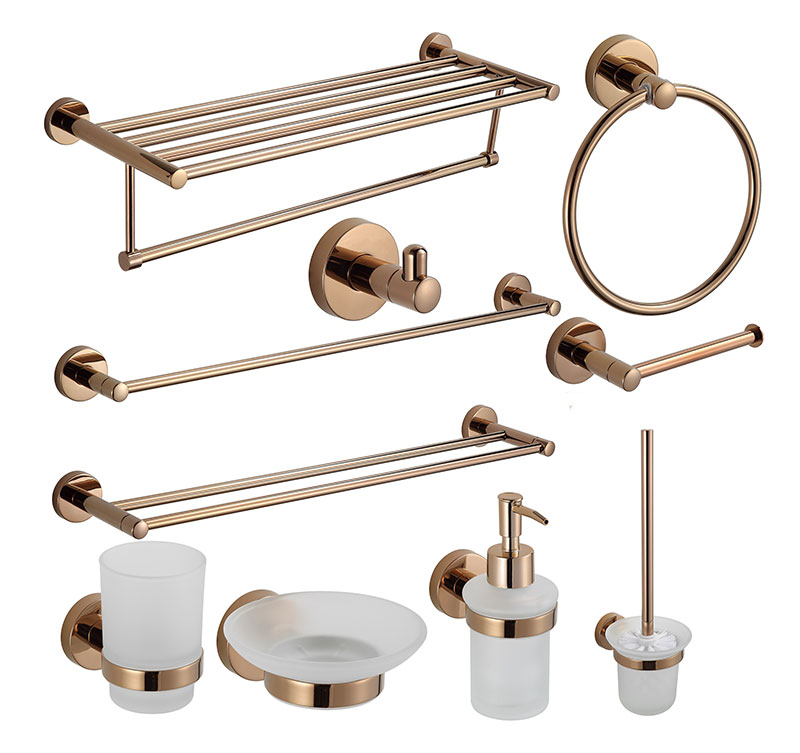
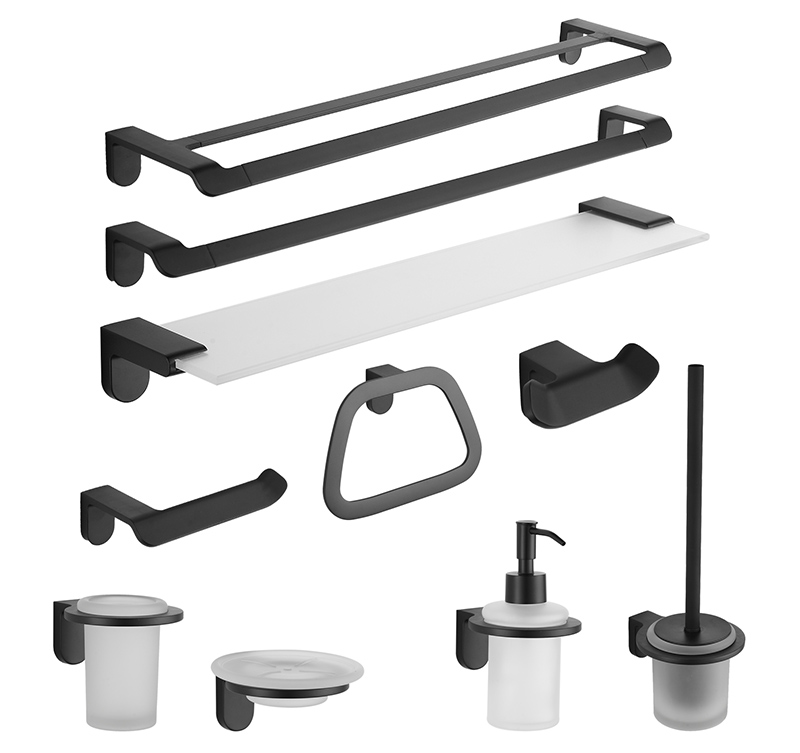
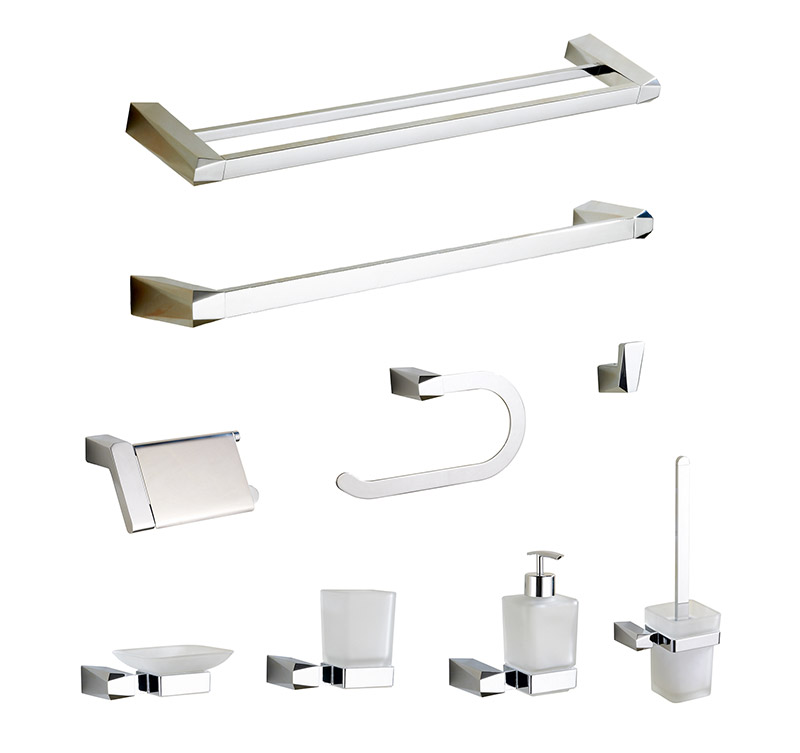
BAOGELI‘s holders are available in chrome (silver), brushed nickel, gold, matte black, ORB, and gunmetal gray. For commercial facilities, matte black and brushed nickel are popular choices because they show less water spotting and fingerprints than high-gloss finishes.
Installation Style
Wall-mounted toilet brushes save floor space and are easier to clean around. Floor-standing models are more inconspicuous and don’t require wall mounting. For shared bathrooms with limited floor space, wall-mounted is often the better choice.
| Feature | Sanitary Design Requirement | Why It Matters |
|---|---|---|
| Ventilation | Bottom drainage holes or open design | Prevents moisture accumulation |
| Drip Tray | Removable and cleanable | Allows thorough disinfection |
| Material | 304 stainless steel | Resists corrosion, easy to sanitize |
| Brush Head | Silicone or replaceable | Reduces debris trapping |
| Antimicrobial Additives | Silver or zinc ions | Slows bacterial reproduction |
| Cleaning Protocol | Daily + weekly + monthly | Maintains hygiene over time |
BAOGELI manufactures toilet brush holders designed for residential and commercial applications. The Brushed Gold Square Toilet Brush Holder Set features a freestanding stainless steel design with a leakproof hidden holder, and comes with dual brush heads—silicone and bristle—for versatile cleaning. BAOGELI‘s toilet brushes are popular on major platforms like Amazon, Alibaba, and AliExpress for their simple and stylish design. The company offers various material options, multiple color finishes, and diverse design styles to suit different facility requirements.
A toilet brush holder in a shared bathroom doesn’t have to be a health hazard. With the right design—ventilation, removable drip tray, antimicrobial materials, and a regular cleaning protocol—it can be a hygienic tool that keeps restrooms clean without compromising public health. For facility managers, the choice comes down to specifying holders that are easy to clean, quick to dry, and built to last.
Ready to specify hygienic toilet brush holders for your facility? Reach out to BAOGELI’s team—they can provide product samples, bulk pricing, and custom color options for your commercial restroom project.