English
 Español
 Français
 Pусский
 ربى
ربى 
A school, a restaurant, or an office building goes through thousands of toilet paper rolls every year. The holder sitting in each stall gets pulled, bumped, and leaned on hundreds of times per day. If you pick the wrong model, you‘ll spend more time fixing wobbling bases and replacing broken spindles than managing your facility. The difference between a holder that lasts five years and one that fails in six months comes down to four specific features: base weight and material, spindle mechanism, replaceable parts, and warranty coverage. This guide walks you through what to look for when buying a Freestanding Toilet Paper Holder for high‑traffic commercial restrooms—not residential bathrooms or light‑duty home use.
Base weight and material: what keeps it from sliding
The single most common complaint in commercial restrooms is the holder that drifts across the floor. Users pull paper, and the entire stand moves. This happens because the base is too light or lacks grip.
What to look for. A weighted base—typically with a hollow cavity that can be filled with sand or a metal plate—adds stability. The base should be made of waterproof materials like ABS plastic or powder‑coated metal. Avoid lightweight all‑plastic stands that feel hollow when you tap them. A heavy base stays put even when someone yanks the roll aggressively.
Rubber feet matter. Non‑slip rubber feet or a full silicone ring on the bottom prevent sliding on tile or vinyl floors. Check that feet are replaceable; worn feet are the first thing to fail in wet restrooms.
Waterproof construction. Commercial restrooms get mopped daily. Water seeps under the base. If the base traps moisture, it can rust or grow mold. A waterproof base with drainage channels or sealed edges prevents this.
Spindle mechanism: what keeps the roll from spinning freely
A roll that spins without feeding is just as frustrating as a missing roll, so the spindle—the rod that holds the toilet paper—must grip the core securely. Spring‑loaded spindles are standard on commercial holders: the spring expands to press against the inside of the roll core, but over time springs lose tension, so a good holder uses fatigue‑resistant spring steel that maintains tension for years. Look for a holder that explicitly states it fits “regular to mega rolls,” because mega rolls have larger diameters and heavier cores, and a spindle that works for standard rolls may fail to grip a mega roll, leading to spinning. Inevitably, a spindle will wear out, so a holder with a removable spindle (not riveted or permanently fixed) lets you replace just the spindle instead of the whole unit; always check whether spare spindles are available before buying.
Construction quality: what prevents cracking and rust
Commercial restrooms are wet, humid, and sometimes harshly cleaned with bleach or other chemicals. Material choice determines survival. The table below compares the most common base and pole materials used in freestanding toilet paper holders.
| Material | Durability | Corrosion Resistance | Chemical Resistance | Typical Cost | Best For |
|---|---|---|---|---|---|
| ABS plastic | Moderate (can crack under impact) | Good | Moderate (may degrade with bleach) | Low | Light‑traffic, dry restrooms |
| Polypropylene (PP) | Good (flexes under stress) | Excellent | Good (resists most cleaners) | Low‑Medium | General commercial use |
| Powder‑coated steel | High (strong, but coating can chip) | Moderate (rusts if coating fails) | Moderate (coating dependent) | Medium | Offices, schools (low moisture) |
| Stainless steel (304) | Very high | Excellent | Excellent | High | Wet environments, high‑traffic, industrial |
Base material. ABS plastic is lightweight and won‘t rust, but low‑grade ABS becomes brittle after UV exposure (if near windows) or from cleaning chemicals. Polypropylene (PP) is more chemical‑resistant. Metal bases with powder coating resist impact but can chip and rust if the coating fails. For most commercial applications, high‑density plastic with a wide footprint is the best balance of durability and cost.
Pole material. Steel poles with chrome or powder coating look nice but can rust at weld points or where the finish scratches. Stainless steel is more corrosion‑resistant but costs more. For public restrooms, stainless steel is worth the premium.
Assembly joints. Look for welded or reinforced joints, not simple snap‑fits. A holder that comes apart in a box for “easy assembly” often comes apart in use. Pre‑assembled or welded construction is more reliable.
Replaceable parts and warranty: what protects your investment
No holder lasts forever, but when a part fails, being able to replace just that part saves money. Focus on replaceable components: spindles, rubber feet, and non‑slip rings—some holders even offer replacement spring mechanisms. Avoid models where these parts are molded into the base or permanently attached. Look for a minimum two‑year warranty against defects; longer warranties (five years on structural components) indicate higher confidence, but beware of “lifetime warranties” that exclude normal wear items like spindles and feet. Before buying, ask the supplier whether spare parts are in stock and how quickly they ship—a holder with a two‑year warranty but no spare parts available is useless after the first breakdown.
Common mistakes buyers make
Buying residential models for commercial use. A $20 holder from a home goods store is designed for a powder room that sees 10 pulls a day. Put it in a gas station restroom, and it will fail in weeks.
Ignoring floor type. A holder with small hard plastic feet will slide on wet tile. A holder with large soft rubber pads grips better. If your restroom has uneven floors, look for adjustable feet that can level the unit.
Forgetting about cleaning access. Custodial staff need to mop under and around the holder. A holder with a narrow base that sits flush to the floor traps dirt and water. A base with a raised edge or open design allows cleaning underneath.
Questions facility managers ask
Q: How much should a commercial freestanding toilet paper holder weigh?
A: A well‑built holder should weigh at least 2–3 kg empty. With a weighted base (sand or metal plate), the total should be 4–6 kg. Anything lighter will slide.
Q: Can I use a freestanding holder on carpet?
A: Yes, but carpet fibers can interfere with rubber feet. Add a solid base plate or use a holder designed for carpet with longer feet.
Q: How often should I replace rubber feet?
A: Inspect every six months. Replace when they crack, flatten, or lose grip. In very wet restrooms, replace annually.
Q: What’s the most durable material for commercial restrooms?
A: Stainless steel base and pole with silicone rubber feet and a spring‑loaded stainless steel spindle. This combination resists rust, chemicals, and impact.
The commercial‑grade holder that gets it right
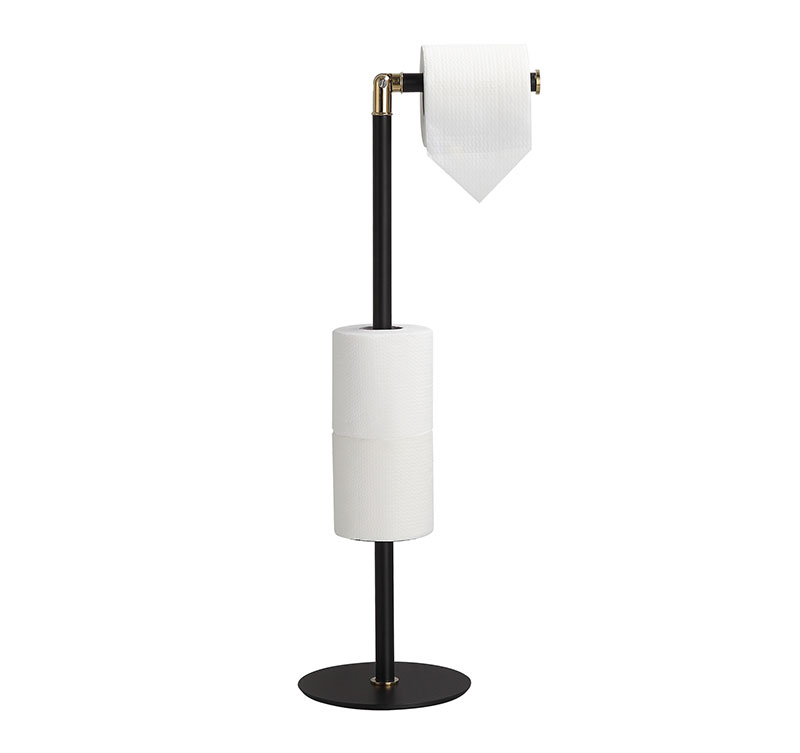
When a facility manager needs a holder that won‘t slide, won’t spin, and won‘t crack, the Freestanding Toilet Paper Holder with 3‑Tier Storage, Waterproof Base, Space‑Saving Bathroom Organizer for Multiple Rolls (Regular to Mega Sizes) from Baogeli meets all the criteria. The weighted waterproof base with non‑slip rubber feet stays put on tile or vinyl. The spring‑loaded spindle grips regular to mega rolls and is replaceable. The three‑tier design stores backup rolls underneath, reducing the frequency of refills. The holder comes with a two‑year warranty, and replacement spindles and rubber feet are available separately. It’s built for the daily abuse of commercial restrooms—not a home bathroom.
→ Request a quote from Baogeli for the Freestanding Toilet Paper Holder with 3‑Tier Storage, Waterproof Base, Space‑Saving Bathroom Organizer for Multiple Rolls (Regular to Mega Sizes) — Share your expected daily traffic (number of users) and floor type (tile, concrete, or vinyl). Their team can recommend the right base weight and spindle configuration for your restrooms.