English
 Español
 Français
 Pусский
 ربى
ربى 
A hotel housekeeper reports that the toilet paper holder spins like a windmill. The guest bathroom towel bar droops on one side. The robe hook feels like it might pull out of the wall any time a guest hangs a heavy bathrobe. Before you call a handyman or order a whole new set, take 30 seconds to watch how the fixture moves. The movement pattern tells you exactly what has failed — and whether you can fix it in five minutes with a hex key or need to open up the wall.
This guide walks you through a simple three‑step diagnostic routine for bathroom hardware sets in high‑traffic commercial restrooms. You will learn how to distinguish a spinning paper holder from a wobbly towel bar, apply the correct fix for each symptom, reinforce the repair so it lasts, and decide when a fixture is beyond saving. No special tools required — just a hex key set, a screwdriver, and a few replacement anchors kept in the maintenance closet.
Read the Movement: Spin, Wobble, or Detached?
Don‘t touch anything yet. Just observe. The movement pattern falls into one of three categories.
Spinning (rotating around the axis) – The bracket stays firmly attached to the wall, but the bar or roller spins continuously without stopping. The paper roll turns but never tightens. The towel bar rotates in its socket. This points to a failed internal component — either a loose set screw or a worn spring axle. The wall anchor is fine.
Side‑to‑side wobble – The entire base rocks when you push on the bar. The screws are still in the wall, but the fixture moves as a unit. This means the screw holes in the wall have enlarged, or the original anchors were too small for the torque of daily use. The fixture itself is not broken.
One side detached – The left side of the towel bar is flush against the wall; the right side hangs out by half an inch. A robe hook pulls away from the wall at the top. This means the anchor on that side has failed completely, or the metal base has cracked under repeated stress.
| Movement Pattern | Root Cause | Fix Type |
|---|---|---|
| Spinning (bar rotates) | Loose set screw or worn spring axle | Tighten or replace internal parts |
| Side‑to‑side wobble (base rocks) | Enlarged wall holes, weak anchors | Replace with heavy‑duty toggle bolts |
| One side detached (base pulls away) | Failed anchor or cracked metal base | Replace anchor or entire fixture |
Pick the Right Remedy for Each Motion
Once you know the movement pattern, the repair is straightforward. Gather your tools first: a set of metric hex keys (2mm, 2.5mm, 3mm), a Phillips screwdriver, a drill (if you need to replace anchors), heavy‑duty toggle bolts (SnapToggle or Toggler brand), blue thread locker (medium strength), and clear silicone caulk.
When the bar spins freely
Look underneath the bar or on the side of the bracket. There is a small set screw hidden in a recess. Insert the correct hex key — usually 2mm or 2.5mm — and tighten clockwise until snug, then add an eighth of a turn. Do not over‑tighten; the soft metal threads strip easily. If the bar still spins after tightening, the spring axle inside the roller has worn out. Replace it with a new axle of the same diameter and length. Most manufacturers use a standard 8mm or 10mm axle that can be ordered separately.
When the whole bracket shakes
Remove the two screws holding the base. Pull the fixture away from the wall. Examine the holes in the drywall, tile, or marble. If the holes have widened into a figure‑eight shape or the original plastic anchors spin freely, you need a heavy‑duty toggle bolt. Drill the hole out to the diameter specified by the toggle bolt package (usually 12mm or 1/2 inch). Insert the toggle, fold the wings, push through the hole, and tighten. The toggle spreads the load across a large area of the wall‘s backside, eliminating wobble permanently.
When one side has pulled away
Remove the entire fixture. Inspect the base for cracks. If the metal is intact, follow the wobble fix — replace the anchor on the detached side with a toggle bolt. If the metal base is cracked or the screw boss has snapped off, the fixture is not repairable. Order a replacement that matches the finish of the other pieces in the bathroom. For a bathroom hardware sets line like white gold brass, the finish code is stamped on the back of the base. Match it when ordering.
Lock It Down So It Stays Fixed
A repair that stops the wobble today will not stop it from returning in six months unless you add two preventive steps.
Thread locker – Before driving the screws back in, apply a small drop of blue (medium strength) thread locker to the screw threads. Do not use red (high strength); you will never remove the screw again. The blue compound prevents vibration from backing out the screw while still allowing disassembly later.
Silicone friction layer – Run a thin bead of clear waterproof silicone caulk around the back edge of the base, about 3mm from the outer perimeter. Press the base against the wall. The silicone squishes out, creating a gasket that adds friction and seals out moisture. Wipe away the excess with a damp rag. The silicone also prevents cleaning chemicals from seeping behind the base and corroding the screw.
For high‑traffic restrooms with 50‑100 uses per day, schedule a quarterly inspection. Run a hex key over every set screw in the bathroom. A 15‑minute check once every three months prevents a guest complaint and a negative online review.
What to Keep in Your Maintenance Kit
Stock a small kit in the engineering office with these items:
-
Metric hex key set (2mm, 2.5mm, 3mm, 4mm)
-
Phillips #2 screwdriver
-
Flathead screwdriver (for prying off cover caps)
-
Electric drill with 3/16″, 1/4″, and 1/2″ bits
-
Assorted toggle bolts (1/8″ and 1/4″ sizes)
-
Blue thread locker (Loctite 242 or equivalent)
-
Clear silicone caulk
-
Replacement spring axles (8mm and 10mm)
-
Spare set screws (M4 × 5mm and M4 × 8mm)
A single maintenance closet stocked with these items can service an entire 200‑room hotel for a year without ordering specialized parts. The cost of the kit is less than the labour for one service call from an outside handyman.
Knowing When to Give Up on a Repair
Not every loose fixture deserves a repair. Replace the entire unit when:
-
The base metal is visibly corroded or thinning – If the brass or zinc alloy has turned flaky or the chrome plating is peeling, new anchors will not help. The base will crack within months.
-
The same position has been repaired twice before – If the wall holes have been re‑drilled and patched multiple times, the drywall is too compromised. Move the fixture up or down by 2 inches and install a new anchor in fresh drywall, or patch the area and relocate.
-
The replacement cost of the fixture is under $30 – For a basic paper holder or robe hook, your labour time to diagnose, source parts, and repair may exceed the cost of a new unit. Install a new one and recycle the old.
For a complete bathroom hardware sets where only one piece fails, you do not need to replace the entire set. Order a single replacement that matches the finish. The manufacturer‘s finish code is usually stamped on the back of the base. White gold brass, brushed nickel, chrome, and matte black are common finishes that remain in production for years. If the finish is discontinued, you may need to replace the whole set to maintain visual consistency.
Common Questions from Maintenance Teams
Can I use construction adhesive instead of screws?
No. Adhesive fails under the torque of a guest pulling a towel or spinning a paper roll. Within a few months, the fixture will pull away from the wall, leaving dried adhesive chunks on the tile that are difficult to scrape off. Always use mechanical fasteners.
How tight should the set screw be?
Snug plus an eighth of a turn. You should feel resistance when the screw contacts the axle, then a quarter turn more. If you strip the threads, the set screw will never hold again. Replace it with a new one of the same size.
Do I need to replace the entire bathroom hardware set if one holder fails?
No. Most manufacturers sell individual pieces. Order a replacement that matches the finish of the other pieces. White gold brass and brushed nickel are standard finishes that are usually available as singles. If the set is discontinued, you may need to replace the whole set or switch to a contrasting finish intentionally (e.g., all matte black except one chrome piece as an accent).
Can I paint a mismatched replacement piece to match?
Not for commercial use. Spray paint will wear off within weeks of daily cleaning with bleach wipes. Replace with the correct finish.
My towel bar has no visible set screw. How do I remove it?
Some bars have a small grub screw hidden inside the mounting post. Look for a tiny hole on the underside of the post near the wall. Insert a hex key at a 45‑degree angle. Others have a cover plate that pries off with a flathead screwdriver, revealing a standard Phillips screw underneath. If neither, the bar may be a one‑piece molded design that cannot be repaired — replace the entire bar.
Wrapping Up: A Little Prevention Goes a Long Way
Most loose towel bars and spinning toilet paper holders can be fixed in under 15 minutes without replacing the entire fixture. The key is diagnosing the movement pattern first: spin points to a set screw or axle, wobble points to the wall anchor, and detachment points to a failed anchor or a cracked base. Keep a small kit of hex keys, toggle bolts, thread locker, and silicone in the maintenance closet. Schedule quarterly inspections to catch looseness before a guest complains.
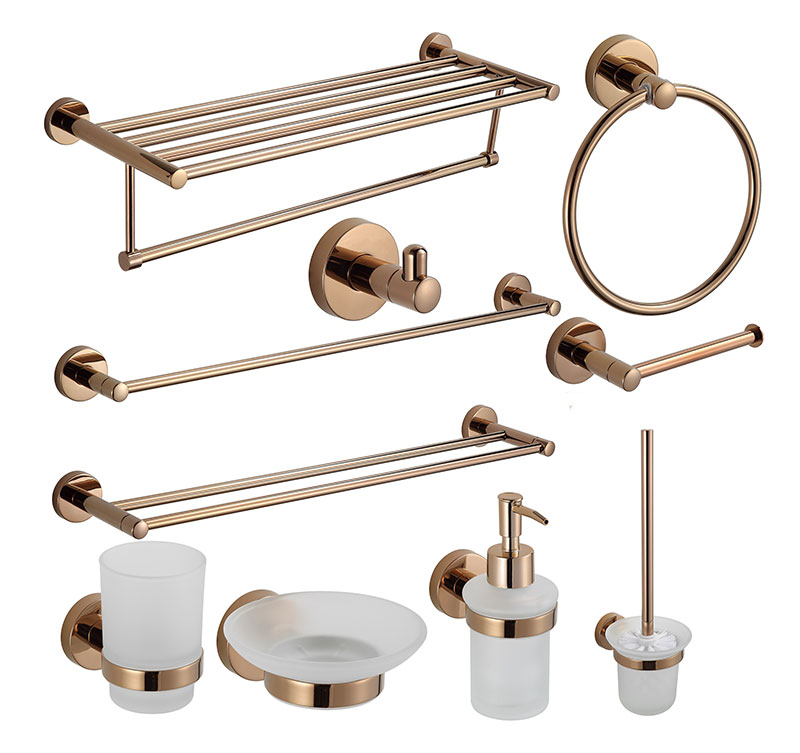
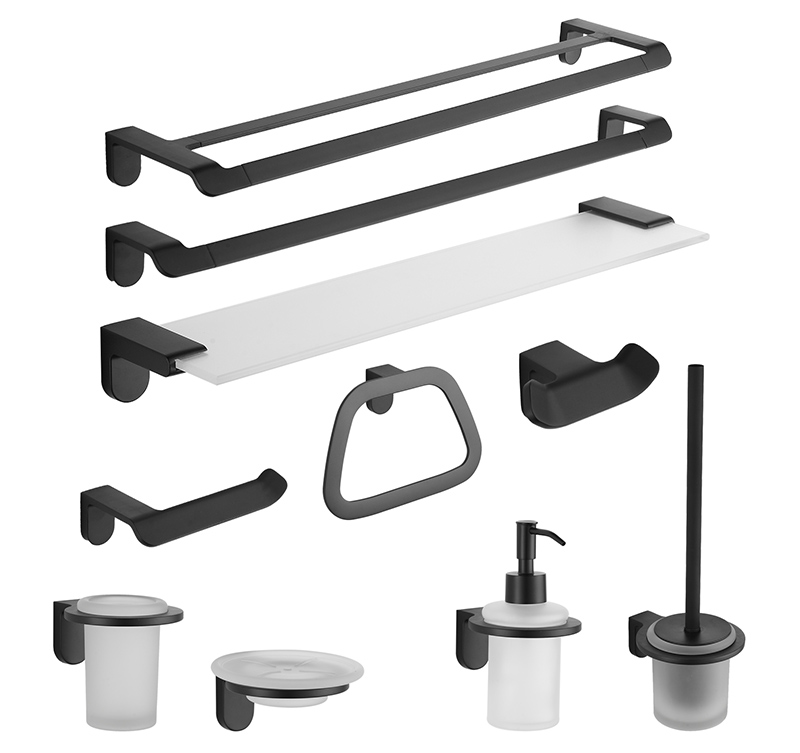
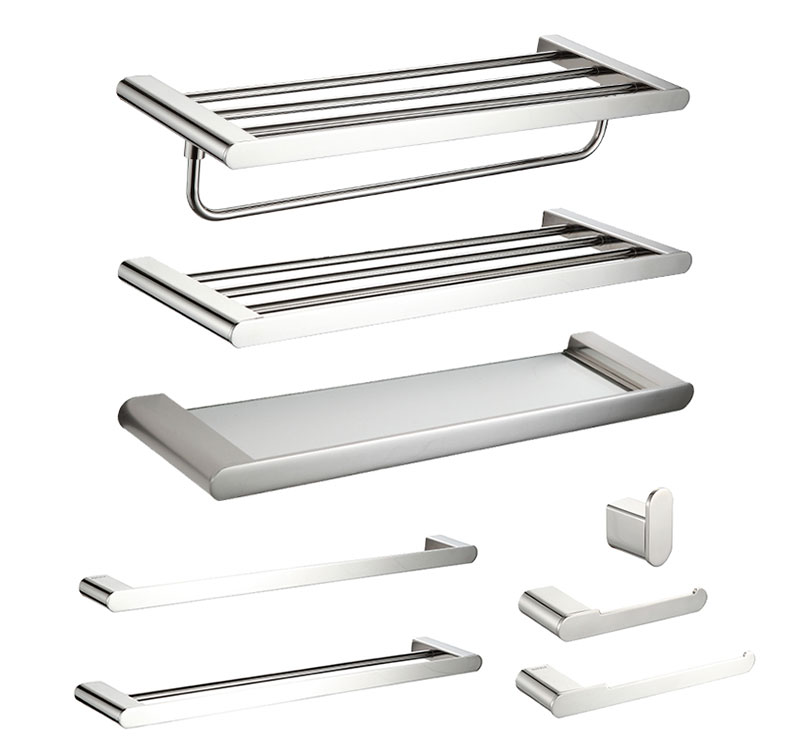
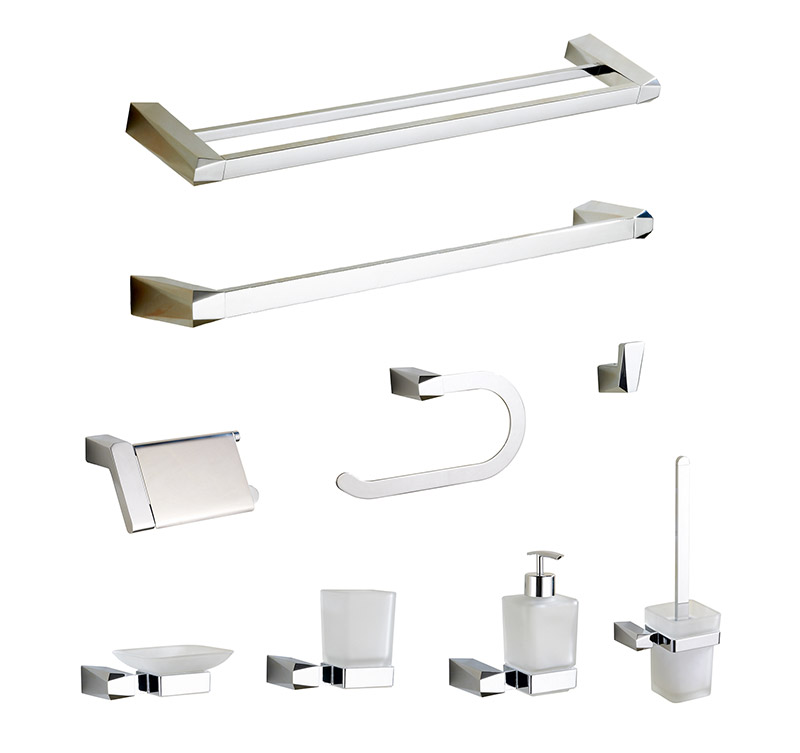
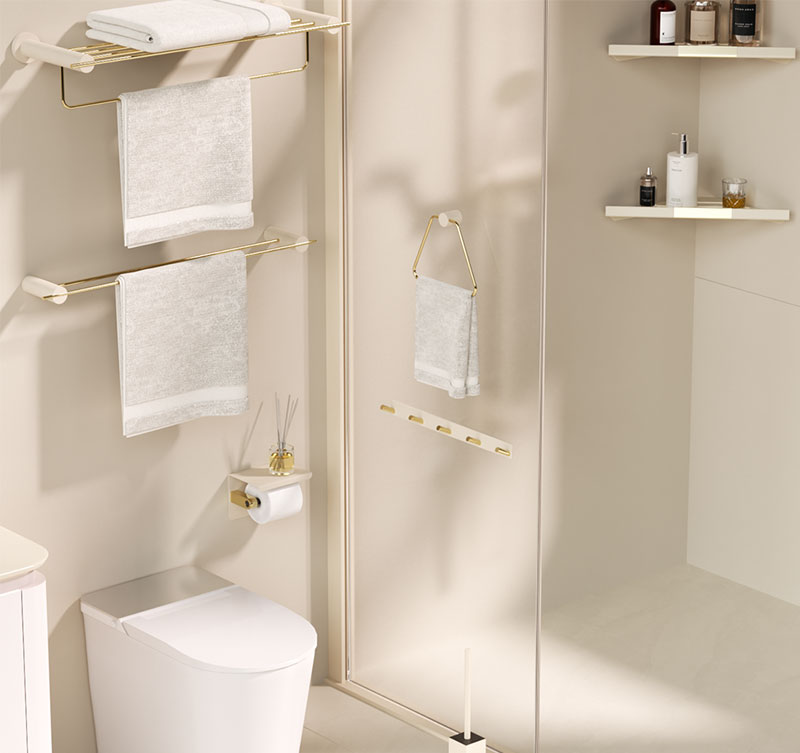
For property managers who want to reduce maintenance calls from the start, choose bathroom hardware sets made from stainless steel or solid brass with a 24‑hour acid salt spray test certification. BGL‘s Luxury White Gold Brass Bathroom Accessories Set comes in seven finishes, 3‑12 piece configurations, and passes the 24‑hour CASS test for commercial‑grade corrosion resistance. The set includes towel bar, towel ring, toilet paper holder, robe hook, shelf, soap dispenser, toothbrush holder, and toilet brush holder. Custom branding and packaging available for wholesale orders.
【Request a quote from BGL】
Contact BGL with your required finish, piece count, and estimated monthly volume to receive a sample set and salt spray test certificate.