English
 Español
 Français
 Pусский
 ربى
ربى 
You’ve seen it happen. A wall‑mounted toilet brush holder goes up on a Monday. By Friday, it‘s wobbling. By the following Monday, it’s on the floor. The maintenance log shows the same complaint from three different bathrooms in the same building. The product wasn‘t defective—the installation was.
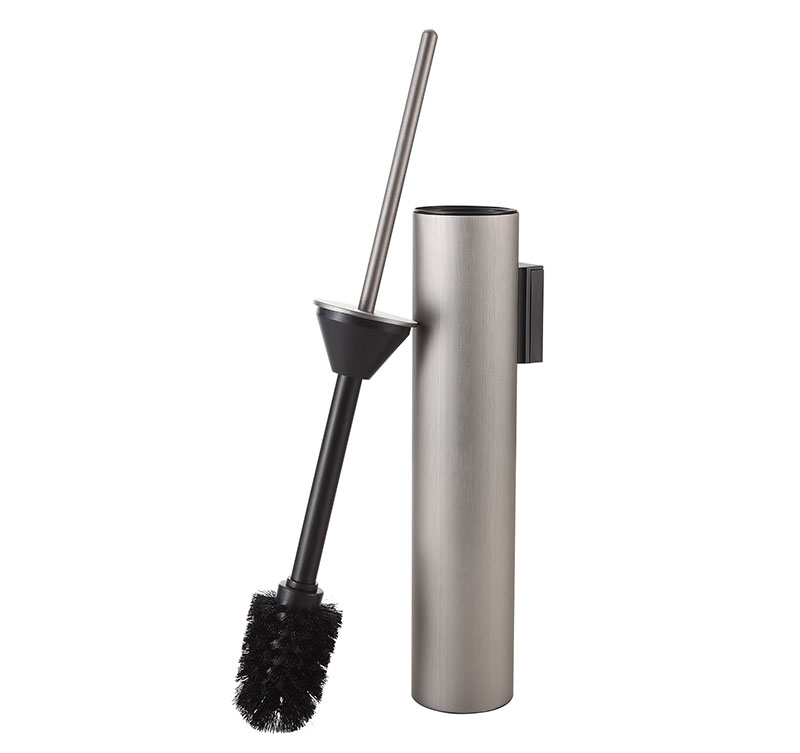
Here’s the reality: a toilet brush holder falling off the wall is rarely a quality issue. It‘s almost always a mismatch between the installation method and the wall surface. Tile, marble, drywall, and concrete each require different anchors. Humidity, weight, and the way people pull the brush out all add stress that cheap plastic anchors can’t handle. This guide breaks down the five most common reasons wall‑mounted holders fail, and gives you a permanent installation procedure that works on any surface. BGL‘s slim wall‑mounted holder is crafted from aluminum with a brushed nickel finish, lightweight and corrosion‑resistant, and includes a removable plastic inner barrel for effortless cleaning. But even the best holder needs to be installed correctly.
Why plastic anchors fail in tile
This is the most common mistake. Plastic expansion anchors are designed for drywall and soft masonry—not for smooth, hard surfaces like ceramic tile or marble.
The friction problem with smooth surfaces
When you drill into tile and insert a plastic anchor, the anchor expands against the walls of the hole. But tile is smooth and non‑porous. The friction between the plastic and the tile is minimal. Over time—often just days—the anchor works loose from the vibration of daily use. The holder wobbles, then falls.
In humid bathrooms, the problem is worse. Moisture seeps into the hole, softening the plastic or causing it to lose its grip. A wall‑mounted holder with cheap plastic anchors will loosen after a few days in a humid bathroom.
What to use instead
For tile, stone, or any hard surface, use metal anchors. Two types work reliably:
-
Winged toggle bolts (also called butterfly anchors) – These expand behind the wall surface, creating a mechanical lock that doesn‘t rely on friction. They can hold 50–100 pounds each, far more than a plastic anchor.
-
Metal spiral anchors – These screw directly into the drilled hole and cut threads into the tile or stone. They’re easier to install than toggle bolts and work well for lighter loads.
The adhesive trap – why sticky pads don‘t last
Adhesive pads are convenient—no drilling, no mess. But they’re also the most common source of failure in commercial bathrooms.
How humidity destroys the bond
Double‑sided adhesive pads are designed for clean, dry, room‑temperature surfaces. A bathroom is none of those things. Humidity breaks down the adhesive bond. Within 30 days of installation in a regularly used bathroom, the adhesive can hydrolyze—chemically break down from moisture exposure. The holder falls off, often taking a piece of paint or surface finish with it.
The right way to use adhesive
Adhesive pads should never be the primary attachment method—only an auxiliary one. Use the adhesive to hold the holder in position while you install screws through the center of the pad. The screws provide the structural strength; the pad prevents rotation and adds vibration damping.
Over‑tightening: when “tighter” means “weaker”
“Tighter is better” is a dangerous myth in hardware installation—especially with plastic components.
Stress cracks from impact drivers
When you over‑tighten a screw into a plastic anchor or a plastic mounting plate, you create stress concentrations around the screw head. Over time—or immediately, if you‘re using an impact driver—those stress points develop into cracks. The plastic fractures, the screw loses its grip, and the holder falls.
The correct tightening method
Use a manual screwdriver—not an impact driver or drill—for the final tightening. Tighten until the screw is snug, then give it one additional half‑turn using only wrist force. The screw should be secure, but you should feel no resistance when you stop.
The physics of a wet brush
A toilet brush fresh from cleaning holds water. A wet brush can weigh 300 grams or more. When you pull it outward from the holder, that weight creates leverage on the mounting screws.
Why the top screw takes the hit
Imagine a holder mounted with two screws—one at the top, one at the bottom. When you pull the brush out horizontally, the top screw experiences a pulling force. The wet brush‘s weight, combined with the outward pull, can generate over 2 kilograms of force on that single top screw.
The support lip solution
Some holders are designed with a support lip—a small ledge or flange at the bottom that rests against the wall. This lip transfers much of the downward and outward force directly to the wall surface, rather than concentrating it on the screws.
Pull vs. lift – the direction matters
Most users don’t think about how they remove the brush. But the direction of removal matters enormously for wall‑mounted holders.
Why pulling creates leverage
When a brush is stored horizontally (with the brush head pointing forward), the user pulls it outward. That creates a bending moment on the holder—a leverage force that tries to pry the top of the holder away from the wall.
When a brush is stored vertically (with the brush head pointing down, and the handle pointing up), the user lifts the brush straight up. That creates a shear force—the force is transmitted directly into the wall, not prying against the mounting screws.
Choose vertical lift every time
Choose a holder with the opening at the top, so the brush is inserted and removed vertically. This minimizes the leverage that causes screws to loosen. Horizontal‑opening holders (where the brush slides in sideways) are more prone to failure because every removal applies a prying force to the top screw.
A 10‑step installation that never fails
If you want a holder that stays on the wall for years, follow this procedure. It takes longer than a quick adhesive job, but it eliminates callbacks.
Step‑by‑step permanent installation
-
Locate wall hazards – Use a stud finder with electrical and plumbing detection to avoid wires and pipes behind the wall.
-
Mark hole positions with a level – Two holes, perfectly horizontal. Use a spirit level, not eyeballing.
-
Drill the holes – Use a drill bit 1mm smaller in diameter than the anchor you‘re using. For tile, use a carbide‑tipped or diamond bit.
-
Clean the holes – Remove all dust with a vacuum or compressed air.
-
Apply waterproof silicone – Inject a small amount into each hole before inserting the anchor.
-
Insert the anchors – For toggle bolts, push the wings through and pull back. For metal spiral anchors, screw them in flush.
-
Apply threadlocker – Put a drop of medium‑strength threadlocker (blue Loctite) on each screw thread.
-
Tighten by hand – Use a manual screwdriver. Tighten until snug, then one half‑turn with wrist force.
-
Wait 24 hours – Allow silicone to cure fully before hanging the holder and brush.
-
Test before loading – Give the mounted holder a firm tug. If it moves, repeat with larger anchors.
Quick answers on stubborn installations
Q: Can I reuse the same holes after the holder falls off?
A: No—and this is a common mistake. The original holes are likely enlarged from the anchor failure. Drilling new holes in the same location won‘t provide a secure grip. Drill new holes at least 2cm away, or use larger toggle bolts in the existing holes. For tile, fill the old holes with epoxy and drill in fresh locations.
Q: Is there a no‑drill solution for marble walls?
A: Yes, but with trade‑offs. Use a two‑part epoxy adhesive specifically rated for stone and moisture. Clean thoroughly with isopropyl alcohol, apply the epoxy, and clamp the holder in place for 24 hours. Expect a lifespan of about 1 year in high‑humidity commercial bathrooms. For permanent installation, drilling with a diamond bit is always more reliable.
Q: Do commercial‑grade holders have stronger mounting plates?
A: Yes—significantly. Residential holders often use two‑screw plastic plates that crack under stress. Commercial‑grade holders typically use three‑screw metal plates with a larger footprint, distributing load across a wider area. When specifying holders for hotels or public restrooms, always choose commercial‑grade with metal mounting plates.
Below is a quick reference table for common installation errors and their solutions:
| Installation Error | Why It Fails | Correct Solution |
|---|---|---|
| Plastic anchors in tile | No friction on smooth surface | Metal toggle bolts or spiral anchors |
| Adhesive pads only | Moisture breaks down bond | Screws through adhesive; epoxy for no‑drill |
| Over‑tightened screws | Stress cracks in plastic | Manual screwdriver, wrist‑force only |
| No support lip | Leverage pulls top screw | Choose holder with wall‑contact lip |
| Horizontal brush opening | Pulling creates bending moment | Choose vertical‑lift design |
How BGL‘s slim wall‑mounted holder fits the bill
BGL’s slim wall‑mounted toilet brush holder is designed with both aesthetics and practicality in mind. Crafted from aluminum with a brushed nickel finish, it offers a sleek, modern appearance while remaining lightweight and corrosion‑resistant. The slim, cylindrical design saves space in compact bathrooms, making it ideal for hotels, offices, and residential projects.
The removable plastic inner barrel allows for effortless cleaning—simply remove, rinse, and replace—preventing the accumulation of dirt and grime. The holder also comes equipped with two brushes, ensuring a spare on hand for hygiene and convenience.
BGL offers a 2‑year warranty on this model and provides OEM and ODM services for custom projects. With a 24‑hour neutral corrosion test, the holder is built to withstand humid commercial bathrooms. For contractors and facility managers, factory‑direct pricing and 1‑15 day delivery make bulk ordering straightforward. Model WT‑7857‑1‑SN is available in brushed nickel, with other finishes on request.
When you combine this holder‘s durable construction with the permanent installation procedure outlined above, you get a wall‑mounted solution that stays put—no callbacks, no complaints.
Specifying wall‑mounted toilet brush holders for a commercial project? Contact BGL for product samples and bulk pricing on the WT‑7857‑1‑SN slim wall‑mounted holder. Share your required finish (brushed nickel, chrome, gold, matte black, or ORB) and quantity—their team can provide OEM options and delivery timelines for your project.